Pioneering
Embodied AI
Creating responsible Technology for a sustainable Society.
Latest News
Our Research Focus Areas
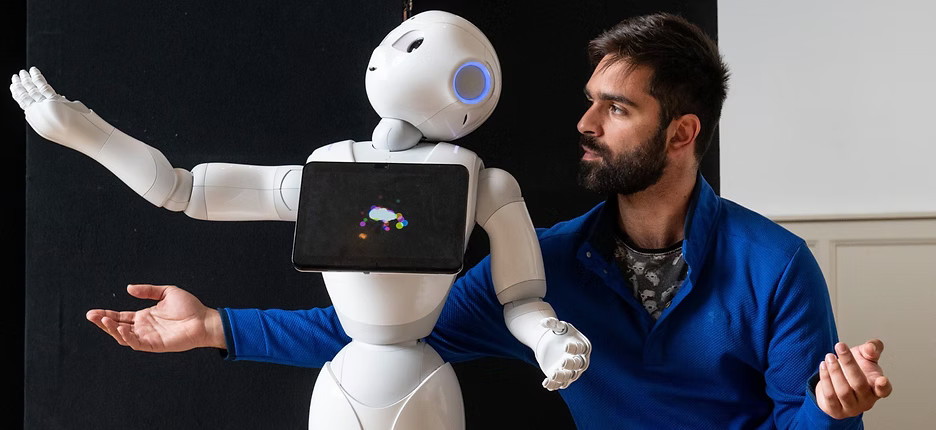
Human Robot Interaction
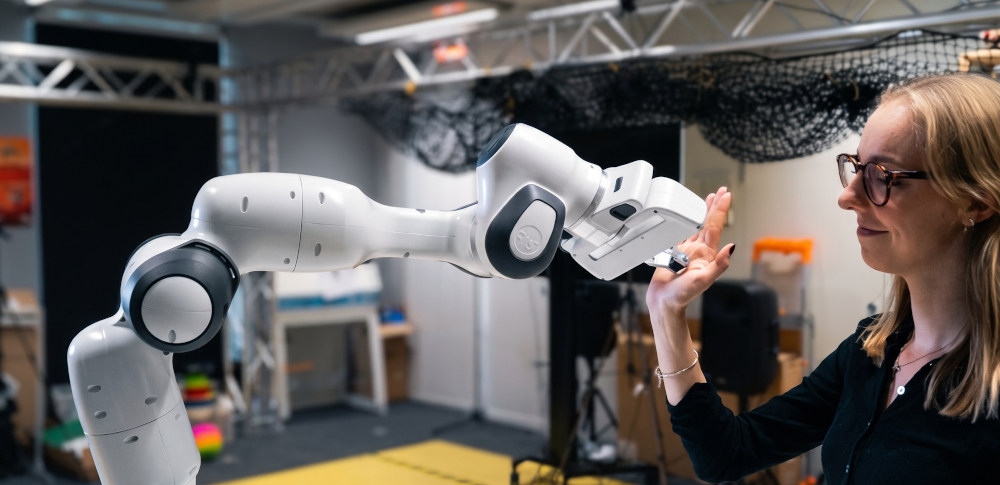
Human-interactive robot learning is an area that sits at the intersection between human-robot interaction and robot learning, in which robots learn from interaction with humans. This is important for finetuning purposes, learning efficiency purposes, and safety purposes. This is an interdisciplinary area combining interactive machine learning techniques, interaction design, pedagogical studies, user behavior modeling, and empirical suer studies.
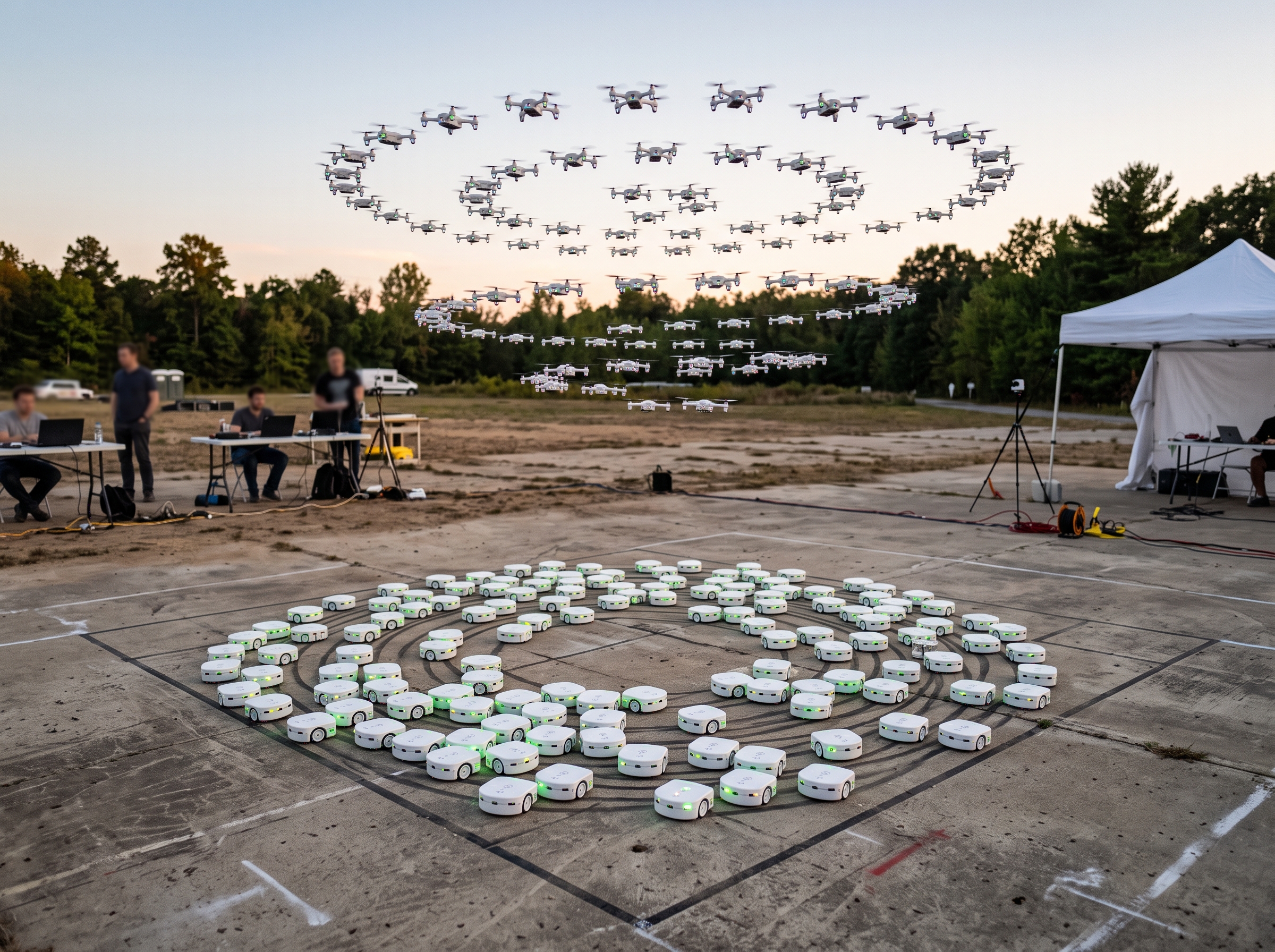
Swarm Robotics
Swarm Robotics is an approach to robotics that draws inspiration from collective intelligence and complex systems, coordinating large groups of simple physical agents without centralized control. Ultimately, swarm robotics bridges theoretical complexity science and practical engineering—deepening our understanding of natural collective dynamics while guiding the design of scalable, fault-tolerant, and socially beneficial autonomous systems.
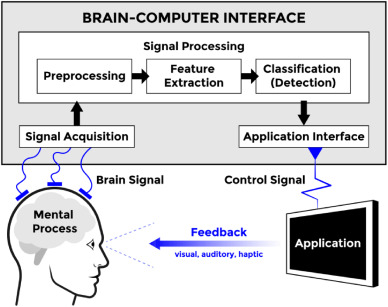
Brain-Robot Interfacing
Our research focuses on developing Brain–Robot Interfaces (BRIs) that enable people to interact with and control robots directly through brain signals. By combining electroencephalography (EEG) with advanced AI models, we decode users’ brain activity to translate their intentions into meaningful robotic actions. Beyond direct brain-based control, we also develop intelligent neurofeedback systems that use EEG to continuously monitor users’ cognitive and mental states, such as attention, workload, and engagement. This information can be used to adapt the robot’s behavior and interaction to the individual user, with the goal of creating more personalized, intuitive, and responsive human–robot interactions.
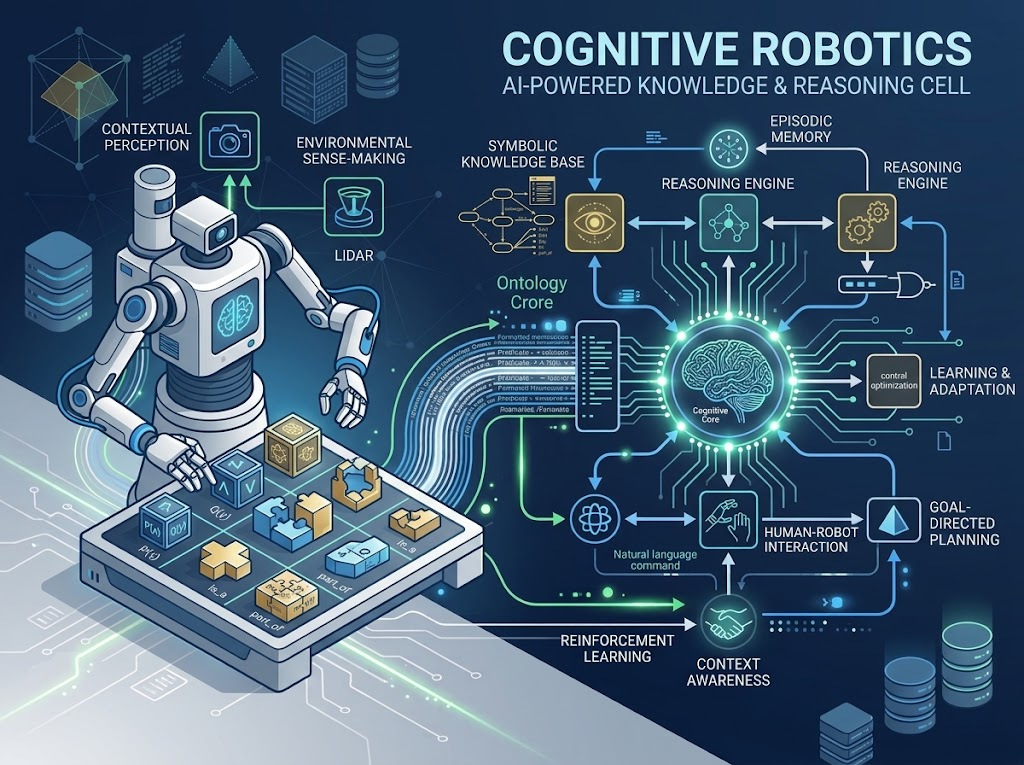
Cognitive Robotics
Cognitive Robotics intersects with Hybrid Intelligence by bringing symbolic approaches and knowledge engineering into the physical world. Rather than relying solely on black-box machine learning, this research investigates how knowledge graphs, semantic technologies, and neuro-symbolic reasoning can be integrated into robotic systems. By combining data-driven learning with structured, explicit human knowledge, this approach enables cognitive robots to not only adapt to complex environments but also explain their behaviors, reason abstractly, and collaborate transparently with humans.
Software Engineering for Creative Systems
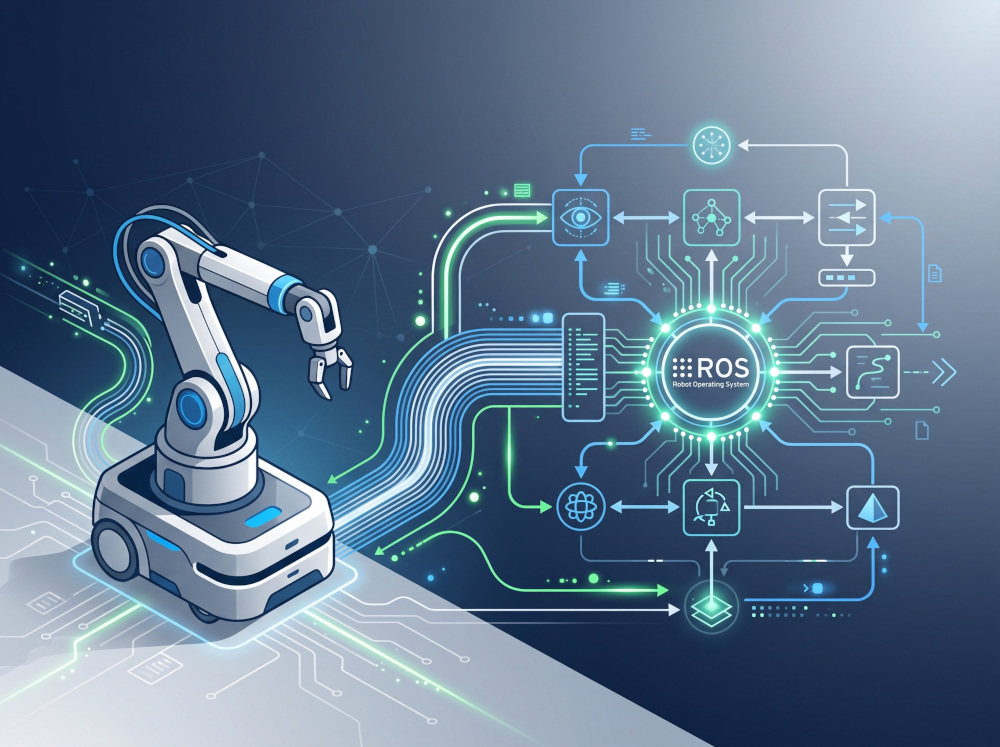
Software Engineering for Creative Systems explores the design, execution, and long-term evolution of software within artistic, musical, and expressive domains. Bridging rigorous software architecture with human-computer interaction, this research investigates how computational tools and languages interface with the physical, tangible, and creative worlds, enabling novel mediums for creative expression while ensuring complex, code-based artworks and interactive systems remain robust, adaptable, and maintainable over time.
Energy-Efficient Robotics Software
The growing complexity of robotics software makes it increasingly difficult to reason about cross-layer design decisions involving energy efficiency, performance, safety, and other quality attributes, with direct consequences for whether the system can complete its mission at all. In particular, energy efficiency is a critical requirement for battery-powered platforms.
Evolutionary Robotics
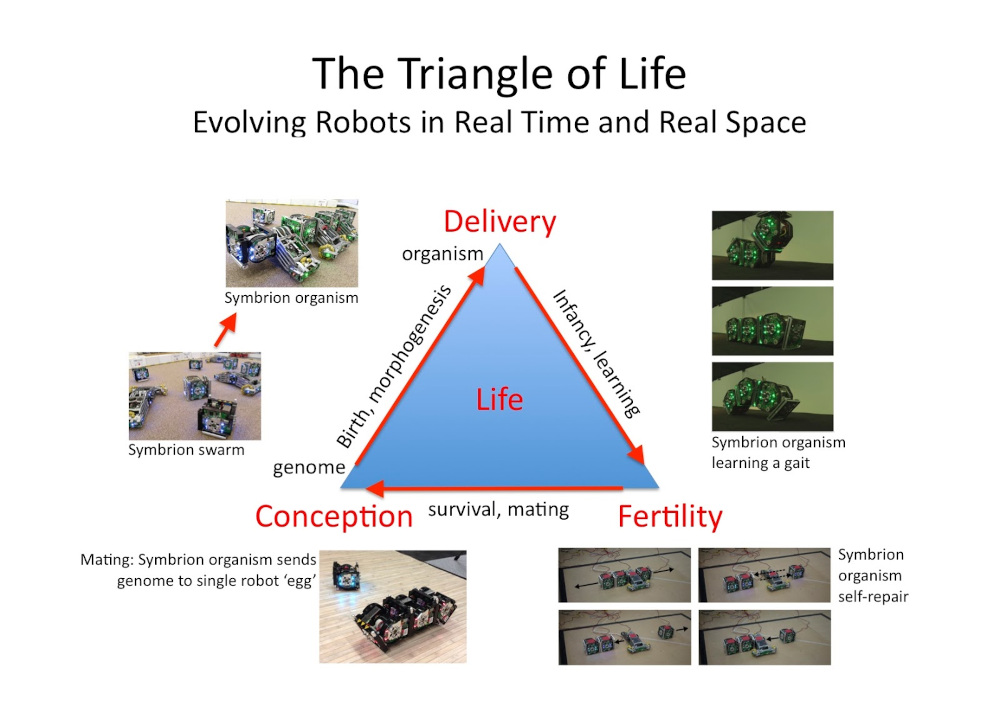
Evolutionary Robotics (ER) and Artificial Life (ALife) are closely linked disciplines that use biological principles—such as natural selection, self-organization, and emergence—to synthesize lifelike behaviors in synthetic systems. Together, they bridge biology and engineering—using synthetic evolution to automate machine design while uncovering how intelligence, behavior, and physical form co-evolve in nature.
Robot Learning
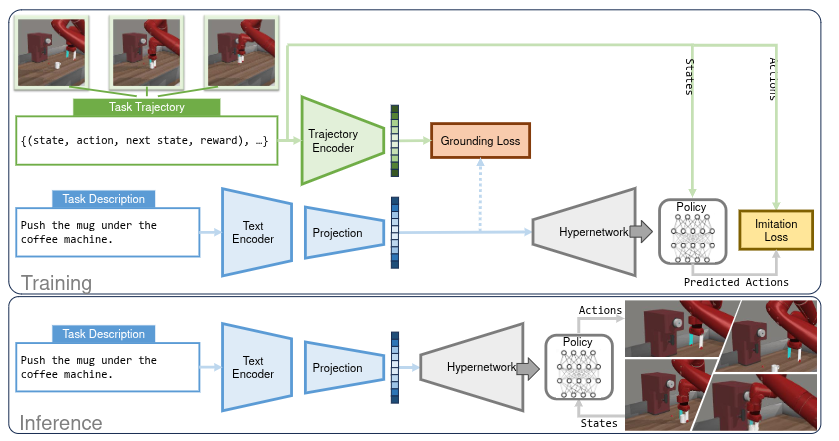
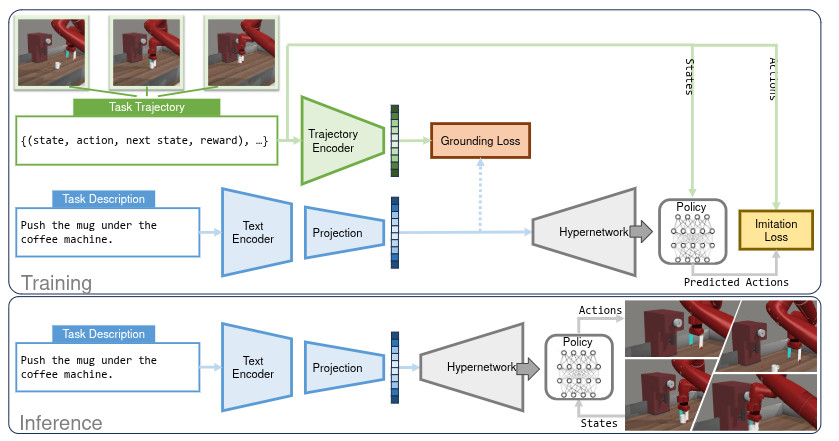
Robot Learning sits at the intersection of modern machine learning and embodied intelligence, empowering physical systems to autonomously acquire complex behaviors from experience. At VU Amsterdam, this research investigates how state-of-the-art deep neural networks, foundation models, and world models can be integrated into robot control, multimodal perception, and task planning—enabling robots to build predictive representations of their surroundings, generalize across novel environments, and execute robust, safe actions in real-world scenarios.
Autonomous Systems Engineering
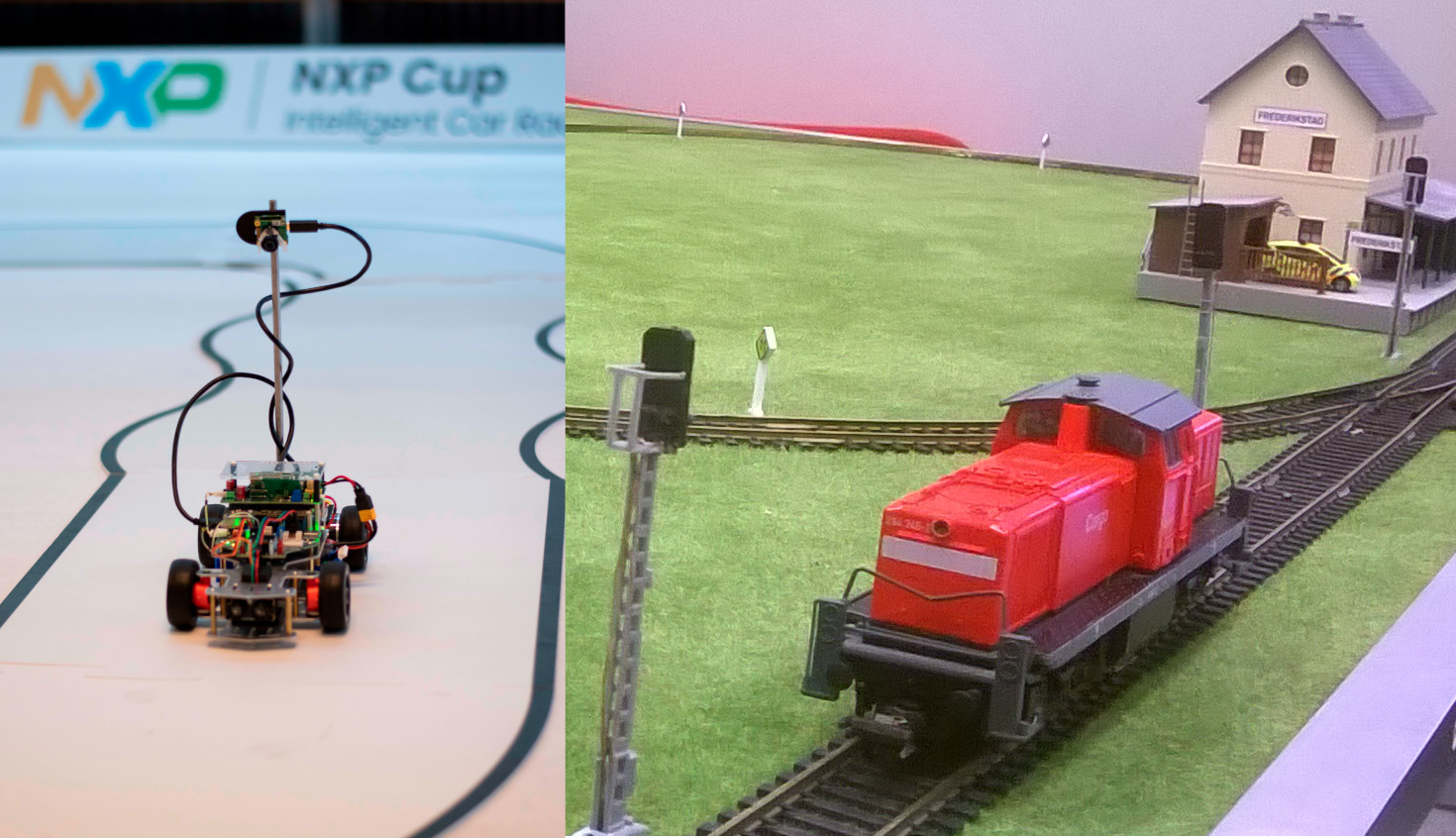
We are the ASE (Autonomous Systems Engineering) lab and we are teaching computer science students how to program and test smart systems. For this purpose we built miniature smart systems that mimic real life safety critical systems like 25+ selfdriving cars, 3 railways systems, one insulin pump, 15 smart homes, and a medical linear accelerator used for radiotherapy. Our VU-Rover won the NXP students race competition in 2024. We also built a smart home. Besides teaching, we also do research with the VU-Rover mainly on Bsc projects level on AI for indoors navigation, traffic congestion analysis, energy efficiency, etc. We did in the past research on distributed control algorithms like Blockchain used for railway management in collaboration with ProRail.
Social Robotics
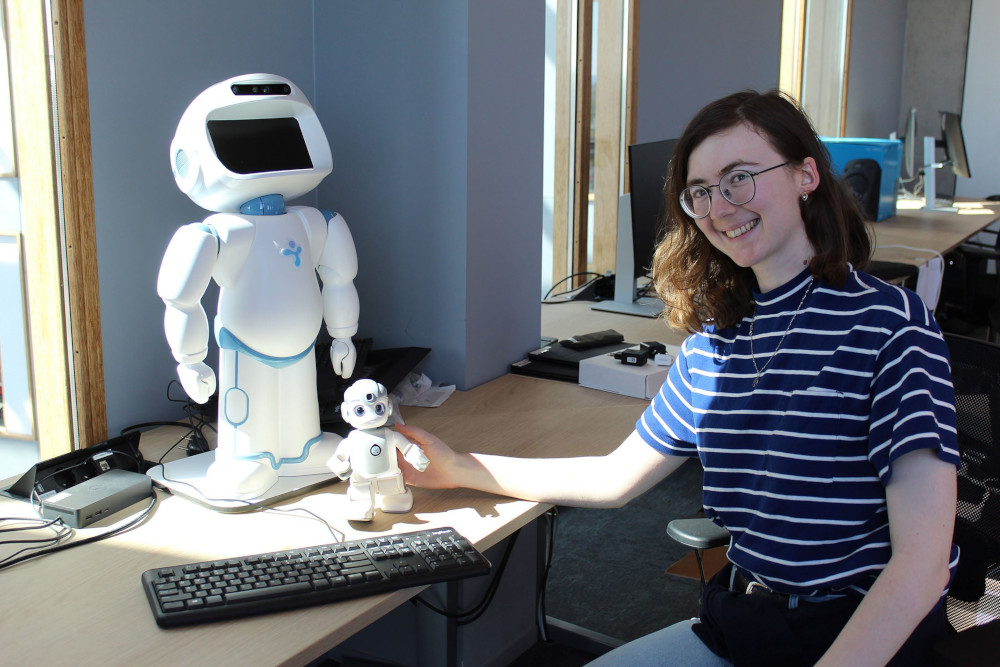
Social Robotics focuses on designing embodied systems that can establish meaningful, long-term relationships with people in real-world settings. Working within the Social AI group at VU Amsterdam, this research specializes in child–robot interaction and healthcare, using participatory design and creative arts to co-develop companions for education, hospital support, and dementia care. By combining safe, agentic AI with rich dialogue and expressive interaction, the work creates robots that empower human connection and adapt meaningfully over time.